The Most Important Tips for Heavy Equipment Washing
Routine heavy equipment cleaning is vital for minimizing damage, enhancing operational efficiency, and extending the service life of your machines. However, like most aspects of machine maintenance, the process isn’t as simple as just washing your car. To help you out, we put together a set of guidelines and best practices for completing cleaning the right way.
Implement a regular washing schedule
How often you handle heavy equipment cleaning depends on usage intensity and working conditions. For exceptionally muddy or dusty work environments, washing might be necessary every few days or at minimum, weekly. Allowing dirt, grease, and debris to accumulate complicates the removal process and can hinder operational safety and efficiency.
Establish a dedicated cleaning area
Heavy equipment washing may be regulated by local environmental ordinances and restrictions. Many areas have rules prohibiting the release of contaminated water that contains fuel residues, grease, and other pollutants into water systems. By creating a designated wash bay or station, you can prevent contaminants from entering the environment and comply with local regulations while cleaning your machines.
Your two primary options are installing a permanent wash bay at your facility or equipment storage location, or using a portable wash pad that can be erected at your jobsite. Both permanent and mobile wash bays operate by capturing the contaminated water in a collection basin beneath the wash pad, then directing it through a water treatment system that removes any potentially harmful substances.
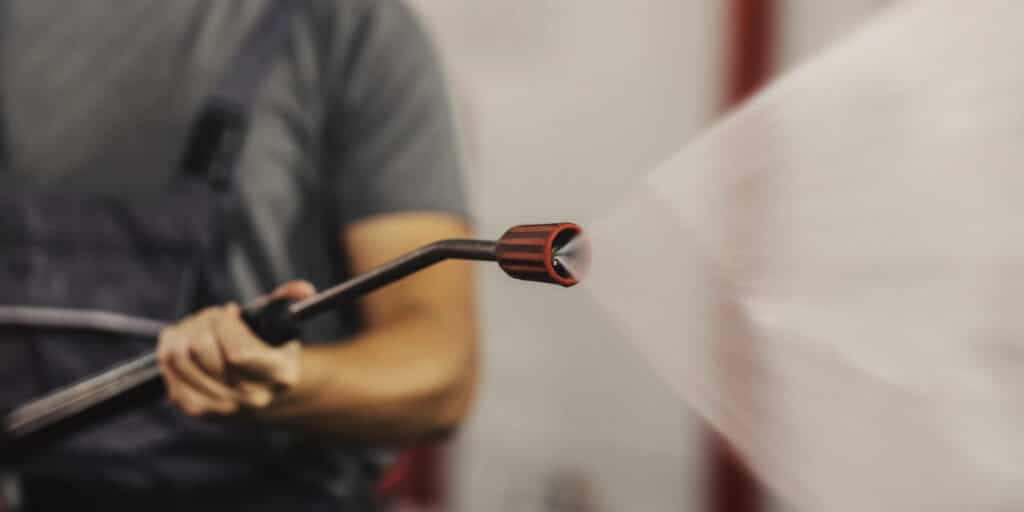
Utilize a pressure washer
For most effective heavy equipment cleaning, we recommend using a pressure washer. It’s considerably more efficient at removing stubborn residues like hardened mud, grease, and debris compared to standard hoses, which often don’t have the required force to fully dislodge grime. For particularly resistant buildup, a hot water pressure washer is best, as it will break down and dissolve grime, grease, and oil more quickly and effectively than cold water, helping to save time and conserve water.
Use protective gear
When cleaning and handling other kinds of machine maintenance, it’s crucial to wear the right protective gear. Your staff must have full length clothing or coveralls, non-slip footwear, eye and face protection, and gloves. Proper attire reduces the risk of injury caused by hot water, chemicals, or contaminants during the heavy equipment washing.
Apply the right cleaning solutions
If your machine is covered with a mixture of organic substances, such as lubrication grease, fuel residue, or insect and bird waste, or inorganic substances, such as sand, gravel, and dust, then detergents will help you with heavy equipment cleaning.
Here are some of the best chemicals to clean the grease, dirt, and grime during heavy equipment washing:
- Acidic pre-soaks and/or aluminum brighteners for oxidation and mineral residue
- High pH detergent to neutralize your low pH presoak & clean normal buildup
- Friction detergent for brush washing that will reduce drying & surface abrasions
- Degreaser for a heavy buildup of grease, fuel spills, and oils
- Concrete and cement cleaner for removing paving materials, lime, fly ash, rust, and water scale
Remove all attachments
When handling heavy equipment washing, it’s important to detach any accessories and clean them independently. That way, you can reach grime more easily and the entire process will be simpler and more seamless.
If you have any questions about heavy equipment cleaning or machine maintenance in general, contact our team today!