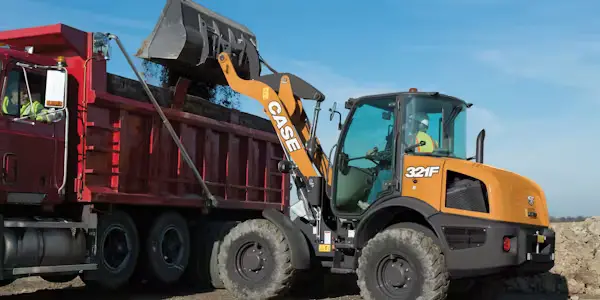
When it comes to how to load dump trucks with a wheel loader, following a few essential tips can help you to get the job done more efficiently while reducing the potential for waste. The following dump truck load tips, including using the correct loading pattern, selecting advanced loader features, and ensuring you have a matching bucket size, can go a long way toward making dump truck loading in Northern Illinois easier.
Dump Loading Tips – Using the Correct Loading Pattern
If you are interested in how to load a dump truck, Burris recommends the first tip to be using the right loading pattern. The Y or V pattern are the most effective options.
- Begin by positioning the dump trucks so that the rear of the trucks is located slightly off the edge of the material pile.
- Start at a 45-degree angle and then move forward. Next, move so that you are curving to the right to fill the bucket.
- Reverse back to the beginning position.
- Move forward again so that you are curving to the left to dump material into the truck.
- Reverse back to the original 45-degree angle for the next loading cycle.
Using the Y or V loading pattern will help to reduce turns and minimize travel distance. Make certain the truck position remains consistent to avoid creating a cycle that is either too large or too small. The goal is to create enough space to maneuver, but not so much space that you have unnecessary travel distance.
How to Load a Dump Truck – Ensure the Bucket Size Matches the Setup
Matching dump truck capacity to the daily load volume is another important dump truck loading tip.
- Begin by selecting a bucket size that will allow the truck to be filled in as few cycles as possible without tipping the load or exceeding the maximum capacity of the loader.
- If you have questions about this, consult the operator manual for the loader to learn more about safe loading limits.
Choose Loaders that Offer Advanced Features
Many loaders offer advanced features that help improve consistency in loading. These options include:
- Return to dig – This feature makes it possible to select a fixed lowering point.When engaged, this feature will ensure the bucket will begin each new cycle at the same position.
- Boom kickout – With this feature, the boom will stop at a pre-set height to ensure consistent loading.
- Auto leveling – The bucket will return automatically to a carrying position after digging or dumping.
Minimizing Spillage Waste and Travel
Using the following dump truck loading tips will allow you to minimize spillage waste as well as fuel loss through reduced travel.
- Plan routes deliberately to reduce fuel consumption and idle time
- Ensure wheel loaders remain moving in an efficient manner. Try to avoid backtracking unnecessarily.
- Make a point of using bucket fill patterns that will prevent spillage and overfilling.
Ensure Operator Consistency and Training
Operator consistency and quality of training are essential to effective dump truck loading. Before beginning wheel loader dump truck loading, ensure the following:
- All operators should be trained to follow the selected dump truck loading pattern and to use the selected dump truck loading feature settings.
- Encourage operators to use movements that are smooth and controlled. Doing so will not only increase safety but also help tomaintaincycle speeds.
- Always make a point of checking the wear on the bucket and adjust sizes for loads, as needed.
Utilizing the right dump truck loading pattern, the correct bucket for the job, and taking advantage of available features will help to greatly improve the efficiency and safety of dump truck loading while reducing waste through spillage and improving overall productivity and reducing fuel use.
Final Thoughts
If you have any questions about how to load dump trucks with a wheel loader or questions about advanced loader features or bucket size, our experienced team at Burris would be happy to assist. Contact us for additional information on dump truck loading or to learn more about our available equipment options at our locations in Joliet, IL, Lakemoor, IL, or Waukegan, IL. We proudly serve Northern Illinois, Northwestern Indiana, and Southern Wisconsin.